
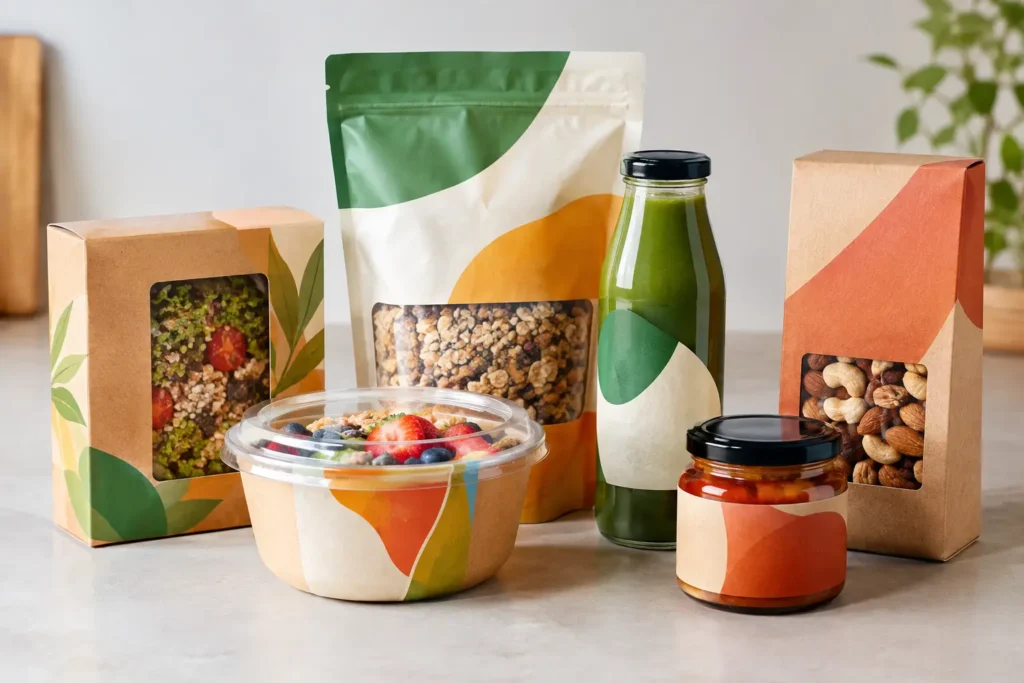
A customer may notice your product for only a few seconds. On a busy retail shelf, at a kiosk counter or while scrolling a distributor catalogue, food packaging and branding decide whether that moment becomes a sale. Great flavour brings customers back, but clear, confident presentation gives them a reason to pick up the pack first.
For banana chips, frozen cekodok, banana rolls or a new festive kuih raya range, the pack is not an afterthought. It carries the product story, protects its quality and tells retailers that the business behind it is ready to trade. For entrepreneurs, it can be the difference between a homemade idea and a product customers are happy to place in their trolley.
Why food packaging and branding matter at the point of sale
Food buyers make fast decisions. They want to know what the item is, what it tastes like, how to prepare it and whether it feels trustworthy. A pack that answers these questions quickly makes life easier for shoppers and for the retailer selling it.
This is especially true for Malaysian food products entering new markets. A customer in Kuala Lumpur may immediately understand jemput pisang or cekodok. A buyer in Dubai, Japan, France or Australia may need a clearer cue such as “Malaysian Banana Balls” alongside the familiar Malay name. Keeping the local identity while explaining the product in accessible English helps the food travel without losing its character.
Branding also creates recognition. When your banana fries, spicy banana chips and frozen banana fritters share a recognisable look, customers begin to connect them as one family. That makes repeat purchasing easier and gives retailers confidence to take more than one SKU.
Start with the product, not the artwork
Strong packaging begins with practical questions. Is the product frozen, shelf-stable or ready to eat? Does it need a resealable pouch, a freezer-safe bag, a tray, a box or a display carton? Will it be sold through a kiosk, supermarket, convenience shop, hotel, online reseller or overseas importer?
The answer shapes the pack before colours or logos are discussed. A frozen banana doughnut pack must protect the product during cold storage and clearly state preparation guidance. A flavoured banana chip pouch must help preserve crunch while making the flavour easy to spot from a distance. A product for a hotel breakfast buffet may need larger foodservice sizing, while a kiosk snack should be easy for customers to carry away.
Packaging that looks premium but is difficult to stack, transport or seal properly can create unnecessary cost. Packaging that is cheap but tears in transit can damage the brand before the customer even tries the food. The right choice depends on where and how the product will be sold.
Make the product name do the hard work
A creative name can be memorable, but clarity should come first. If the pack says only “Original”, a new customer may not know whether it contains chips, cookies, banana rolls or sauce. Put the main product description where it can be seen immediately.
For example, “Sweet Cinnamon Banana Chips” is clearer than relying on a flavour image alone. “Frozen Cokodok – Malaysian Banana Balls” tells both local and international customers what they are buying. This approach is useful for private-label products too, particularly when the retailer wants a distinct brand but needs the product category understood at a glance.
Build a brand customers can recognise and retailers can trust
Branding is more than a logo placed in the corner. It is the promise customers associate with every pack: flavour, quality, convenience and a product experience worth repeating.
For a banana-food business, that promise might centre on authentic Malaysian taste made convenient for modern homes and retail shelves. The visual identity can feel bold and cheerful, but it should not be so busy that important information disappears. Use colour to separate flavours, while keeping the core brand elements consistent across the range.
A spicy chicken flavour can have a stronger, hotter colour direction. Sweet cinnamon can use warmer tones. Multi-flavour packs need a clear system that prevents shoppers from mistaking them for a single-flavour product. The goal is not to make every pack identical. It is to make every pack clearly belong to the same business.
Trust is built through details as well. Legible ingredients, allergen information, storage instructions, net weight, expiry details and preparation methods show care. For halal-oriented customers and trade partners, suitable certification and compliant labelling are commercial essentials, not decorative badges. Requirements can differ by market, so export labels should be planned with the destination country in mind rather than copied from a local pack.
Design for the real retail environment
A packaging mock-up can look impressive on a computer screen and still fail in a shop. Real packs compete with bright lighting, crowded shelves, freezer doors, price labels and product displays that may not be perfectly arranged.
Test the design at actual size. Place it beside competing products. Look at it from one metre away. Can a shopper identify the flavour, format and brand in a few seconds? Does the text remain readable when the pack is in a freezer? Does a small sticker cover the most important message?
For distributors and retail buyers, outer packaging matters too. Cartons should be clearly marked, practical to handle and consistent with the product inside. A good carton label helps warehouse teams identify stock quickly, reduces picking mistakes and makes receiving goods less complicated. These operational details may not excite the shopper, but they matter to the businesses deciding whether to stock your range.
Use photography and claims carefully
Food photography should make the product look appetising without promising something the customer will not receive. If the banana fritter is shown served with ice cream or chocolate sauce, make it clear that these are serving suggestions. If a pack highlights “spicy”, “crispy” or “ready in minutes”, the product must deliver on that claim.
Avoid filling the front of pack with every message. One strong product image, a clear name, the key flavour cue and the brand are usually more effective than ten competing claims. Customers can find the deeper product information on the back or side panels.
Packaging for growth, private label and export
When a food business expands, packaging needs to work beyond one outlet. It should be adaptable for different pack sizes, flavours, languages and markets without requiring a complete redesign every time. This is where a clear packaging system saves time and protects consistency.
A growing range may need retail pouches for supermarkets, bulk packs for cafés, branded packaging for kiosks and customised designs for private-label customers. Each format serves a different commercial purpose. Trying to use one pack for every channel can limit sales or create waste.
For new entrepreneurs, OEM and ODM support can turn an idea into a sellable product without the cost of building a factory. Product development, recipe direction, pack format and branding should be discussed together. There is little value in developing a great snack if its shelf life, label information or pack size has not been considered early enough.
Pisango understands this from both sides of the counter: creating Malaysian banana delicacies for customers while supporting businesses that want products ready for retail, distribution and export. Whether the goal is a frozen food line, distinctive banana chips or a private-label festive range, the commercial question remains the same: will the product be easy to understand, easy to handle and worth buying again?
A practical checklist before printing
Before committing to a large packaging run, review the pack with the people who will actually use it. Ask the production team whether it is efficient to fill and seal. Ask sales staff whether the key message is obvious. Ask a retailer whether it fits their shelf plan. Ask a customer whether they understand the product without an explanation.
Check that the product name, flavour, net weight, ingredients, allergens, storage instructions, preparation method, batch coding area and legal label requirements are all accounted for. Confirm that barcode placement is practical and that print colours remain consistent across suppliers. Small oversights become expensive once thousands of packs have been produced.
Most importantly, order samples and test them with the actual food. Put frozen packs through cold storage. Carry snack pouches in a bag. Stack cartons for delivery. The best packaging is not merely attractive on launch day. It performs reliably from production line to customer kitchen.
Your food deserves packaging that carries its flavour, local pride and business ambition into every shop, kiosk and new market. Make the first impression clear, make the product easy to trust, and give customers a pack they will recognise when they come back for more.