
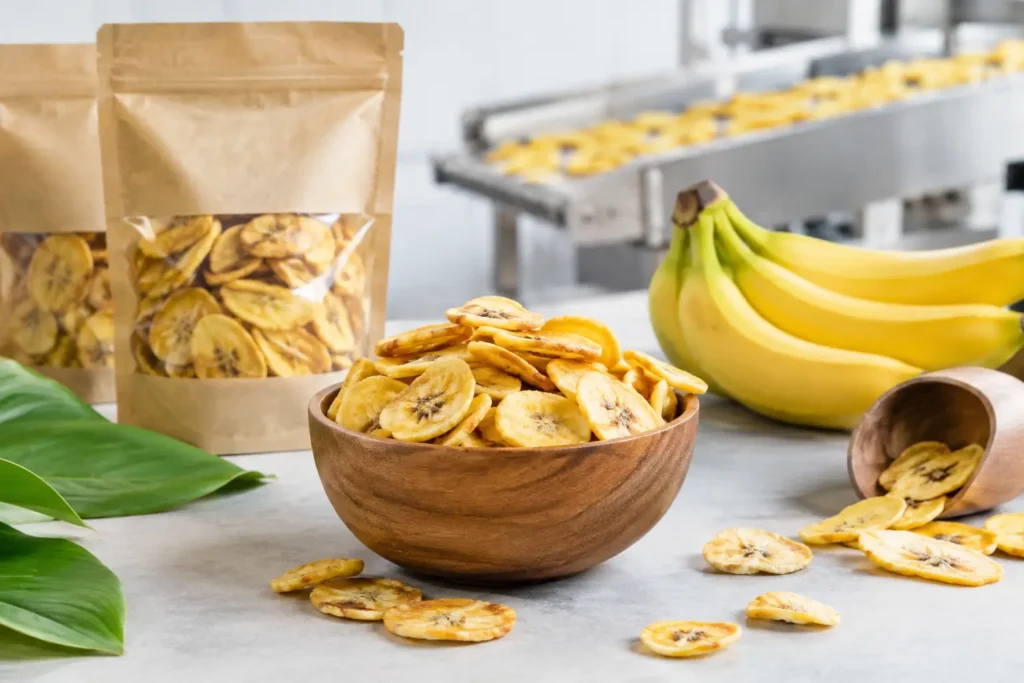
A great banana snack idea should not stop at a kitchen trial, a market stall or a one-off festive order. With the right food OEM partner, it can become a consistent, packed and commercially ready product for kiosks, retail shelves, hotels, cafés and export markets. The real question is not only who can make your product. It is who can help make it ready to sell again and again.
For entrepreneurs, retailers and food operators, OEM manufacturing creates a practical route into the market without the cost of building a factory, hiring a full production team or managing every packaging detail alone. It gives you room to focus on your brand, customers and sales channels while production is handled by an experienced manufacturer.
What Food OEM Means for Your Business
Food OEM means Original Equipment Manufacturing. In simple terms, a manufacturer produces food products for another business to sell under its own brand, or as part of an agreed product range. You bring the business direction, target customer and market opportunity. The manufacturer brings production knowledge, facilities, sourcing experience and the ability to produce at scale.
For a new brand, this could mean launching a private-label banana chip range in sweet cinnamon, salty pepper or a bold spicy flavour. For a restaurant group, it may mean supplying frozen banana fritters or cekodok that kitchen teams can prepare quickly with reliable portion control. For a distributor, it could mean building a Malaysian snack range that is ready for retail, wholesale or international shipment.
OEM is not a shortcut around building a good product. It is a smarter way to build one when you need production capability but do not want the pressure of running your own factory from day one.
Food OEM or ODM: Know the Difference
These terms are often used together, but they serve different needs. Food OEM is usually best when you already have a product brief, recipe direction or clear concept. You may know the flavour, texture, pack size and audience you want, and need a partner to manufacture it to an agreed standard.
ODM, or Original Design Manufacturing, is more suitable when the idea is still taking shape. You may know you want a Malaysian banana snack for convenience stores in Dubai, a frozen menu item for a café chain, or festive kuih raya under your own label, but need help developing the product itself. An ODM partner can support the route from concept to formulation, samples, packaging direction and commercial production.
The best choice depends on how far your product has already progressed. If you have a tested recipe and brand plan, OEM may be the direct route. If you have a commercial opportunity but need guidance on what to make and how to present it, ODM support can save time and reduce expensive wrong turns.
Start With the Product, Not Just the Packaging
It is tempting to begin with a logo, a pouch design and a catchy product name. These matter, but repeat sales come from the product experience. A buyer needs to understand what makes the item worth picking up. A customer needs to enjoy it enough to buy it again.
For banana-based products, that may be the familiar taste of jemput pisang, the crisp bite of banana chips, a satisfying spicy coating, or a frozen banana roll that cooks beautifully during a busy service. The product must fit its sales channel. A kiosk item can be prepared fresh and served warm. A supermarket snack needs shelf appeal and a clear eating occasion. A hotel or restaurant needs dependable preparation, cost control and menu consistency.
Before approaching a manufacturer, be clear about the essentials: who will buy the product, where it will be sold, whether it is frozen or shelf-stable, its intended price position, and how customers will use it. A strong brief does not need to be overly technical. It needs to be commercially honest.
What a Good Food OEM Partner Should Help You Solve
The right manufacturing partner does more than produce cartons. They help turn a product idea into an operation that can grow. That includes practical conversations about ingredient availability, product texture after freezing or storage, minimum order quantities, packaging formats and production lead times.
Ask early about the realities that affect your margin and launch date. A premium printed pouch may look excellent, but it may require a larger order commitment than a new business can comfortably carry. A highly specialised ingredient may create supply risk. A very wide flavour range can make stock planning difficult before you know which product will move fastest.
This does not mean you should make your idea smaller. It means you should launch in a way that can be controlled. One strong hero product, supported by a small number of well-chosen variants, often performs better than a large range with unclear demand.
A capable partner should also understand the difference between making a product and selling a product. Pisango brings that practical view through its experience with frozen banana foods, packed snacks and kiosk operations. Products such as Cokodok, banana doughnuts, banana fritters, banana rolls and banana fries are not only made for production. They are developed around how people buy, prepare and enjoy familiar Malaysian flavours.
Build for the Channel You Want to Win
A food product can succeed in one channel and struggle in another. This is why your OEM discussion should include your route to market from the beginning.
For retail, packaging needs to communicate quickly. Shoppers should see the flavour, understand the product and recognise why it is different within seconds. Pack size, price point and shelf life will shape the decision. For resellers and wholesalers, outer carton efficiency and stock handling also matter.
For foodservice, the focus changes. Chefs, café owners and hotel operators need a product that performs consistently during service. They will care about preparation time, yield, holding quality and whether the final result reflects their menu standard. A frozen banana fritter may suit a buffet or café menu, while a ready-to-fry banana roll can give a small outlet a signature snack without adding complicated preparation.
For export, plan even earlier. International buyers may need specific pack information, product specifications, dependable supply planning and packaging that works for their market. A Malaysian product should keep its identity, but the presentation must also make sense to a customer who may be trying it for the first time in Japan, Australia, France, Korea or the USA.
Private Label Does Not Mean Generic
Private label is sometimes mistaken for a basic product with a different sticker. That approach rarely builds a lasting brand. Your label should have a reason to exist, whether that is a flavour direction, a target customer, a regional retail opportunity, a café concept or a halal-oriented snack selection for modern shoppers.
The most successful private-label projects balance originality with production discipline. You can create a distinctive flavour profile, choose a pack that matches your audience and build a brand story around Malaysian banana delicacies. At the same time, the product needs realistic costs, repeatable quality and enough demand to justify production runs.
Be prepared to make decisions. Every choice affects another part of the project. More flavour powder may improve impact but change cost. Smaller packs may suit impulse buying but increase packing requirements. A premium carton may impress a buyer but raise your launch budget. Good product development is about choosing the trade-offs that support your business plan.
Questions to Settle Before Production Begins
A productive first discussion with an OEM manufacturer should cover more than the recipe. Bring clarity on these commercial points:
- Your target customer and intended sales channel
- The product format, flavours and preferred pack size
- Expected order volume for the first run and future repeat orders
- Your target retail or menu selling price
- Whether you need product development, branding and packaging support
- Your plans for local distribution, kiosks, foodservice or export
You do not need every answer before you start. But the more open you are about your stage of business, the easier it is to build a plan that fits. A first-time entrepreneur needs a different approach from an established retailer adding a new snack category. Both can benefit from OEM production, but their launch path should not look identical.
Turn a Local Favourite Into a Sellable Range
Malaysia has no shortage of memorable food ideas. The opportunity is to package those flavours with care, consistency and commercial purpose. Banana delicacies already carry familiarity for local customers, while offering something distinctive for international buyers seeking a genuine Malaysian product.
Choose a food OEM partner that is ready to discuss the full journey: product concept, sampling, production, packaging, market fit and the practical steps needed to get stock into customers’ hands. Start with a product people will want to finish, then build the brand and supply plan that gives them a reason to come back for more.